
One of the most difficult parts of co-parenting is not making decisions.
It is remembering, proving and trusting what was decided.
When parents are no longer living together, everyday decisions can carry extra weight. A school choice. A medical appointment. A holiday arrangement. A day swap. A shared expense. A change to collection times. These are ordinary parenting matters, but without a clear process, they can easily become sources of dispute.
This is where decision logging becomes essential.
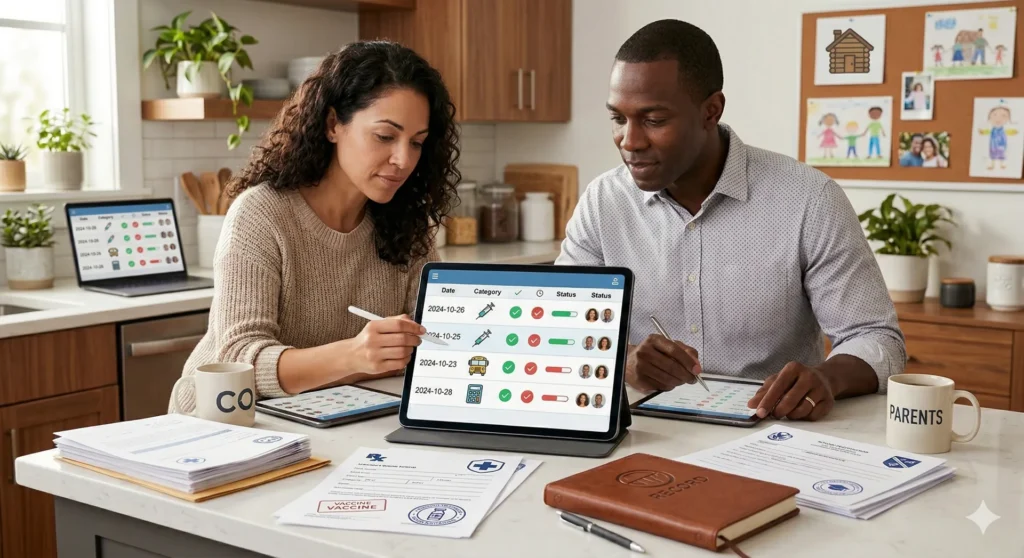
A co-parenting decision log creates a record of requests, approvals, updates and outcomes. It does not exist to make the relationship feel formal. It exists to make the relationship more manageable.
Without a decision log, co-parenting often relies on fragmented communication. A message here. A call there. A verbal agreement that one parent remembers differently. Screenshots. Follow-ups. Defensiveness. Repetition.
Over time, this creates distrust.
One parent feels ignored. The other feels misrepresented. The child is caught in the instability of adult disagreement.
A decision log changes the dynamic because it introduces clarity.
Instead of relying on memory, parents can refer to the record.
Instead of arguing about whether a request was communicated, they can review when it was made.
Instead of wondering whether something was approved, they can check.
That kind of clarity is powerful because it reduces ambiguity, and ambiguity is often what drives conflict.
There is also a fairness benefit.
A good co-parenting system gives both parents a visible, equal opportunity to participate in decisions. It makes the process more balanced. One parent does not have to chase for confirmation, and the other cannot plausibly say they were not informed if the system shows otherwise.
For many co-parents, this is the difference between feeling trapped in reactive conflict and feeling equipped to parent more confidently.
Decision logging also supports child-focused parenting.
When communication is emotional, it is easy for adult history to overshadow present needs. But a structured record gently shifts the conversation back to practical realities. What is being requested? What response is needed? What is the timeline? What is best for the child?
That structure encourages healthier decision-making.
Sync-In highlights decision requests and logging as a core feature, including the ability to send requests, swap days, and keep decisions centrally recorded and uneditable. The platform also notifies users when a new decision needs to be reviewed.
This kind of feature is especially valuable in high-conflict or high-stress co-parenting situations, but it is not only for difficult cases. Even cooperative co-parents benefit from having one organised place to keep important decisions.
Why? Because life gets busy.
Parents are working, managing households, supporting children and handling constant change. A decision log reduces the risk that something important gets lost in the noise.
It also helps when outside professionals are involved. If a mediator, attorney or therapist needs context, a structured record is far easier to work from than a scattered message trail.
At its best, decision logging is not about surveillance. It is about accountability.
It supports transparency without drama. It protects both parents from confusion. And it gives children the indirect benefit of more stable adult coordination.
In co-parenting, trust is not only built through good intentions. It is built through repeatable systems that support fairness and clarity.
A decision log is one of those systems.
And for many families, it can turn recurring friction into a more workable, respectful process.